Tapioca Dumplings
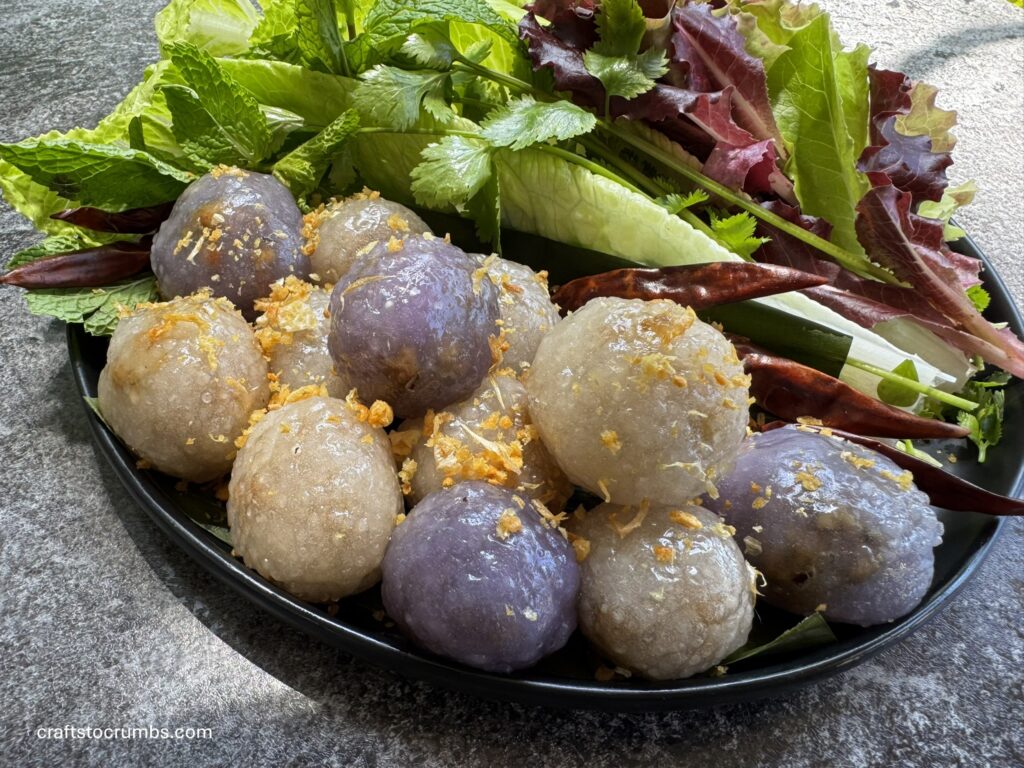
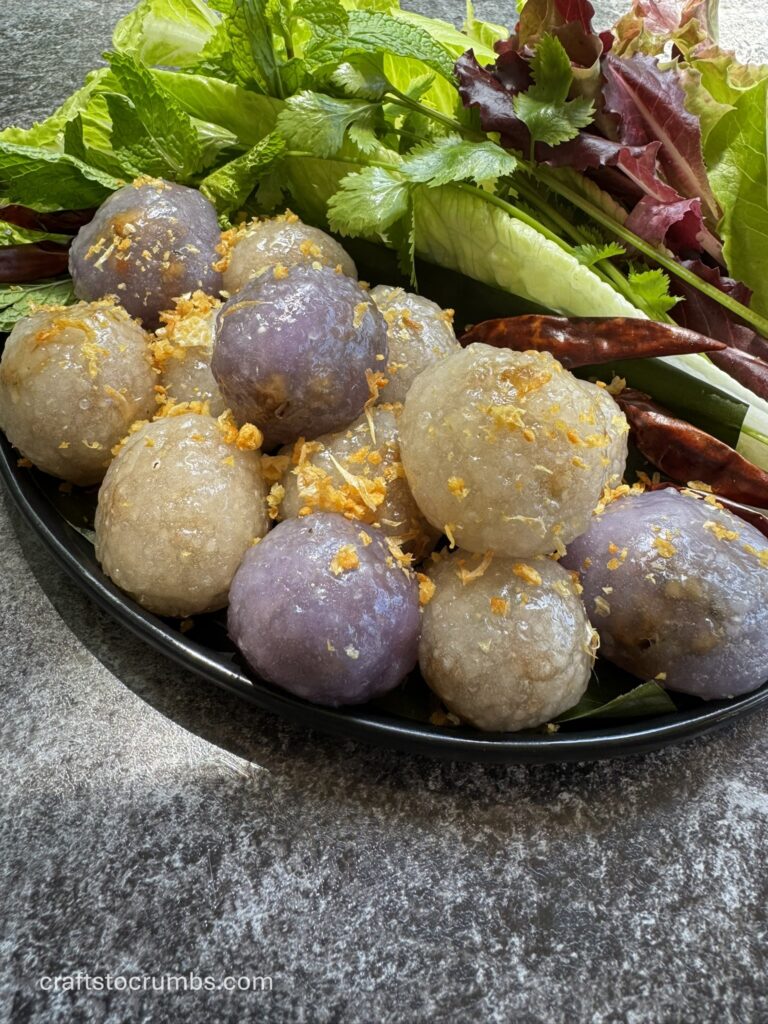
Sakoo yat sai (Lao) / Sakoo sai moo (Thai) is tapioca dumplings typically made with a minced or ground pork filling. Sakoo meaning tapioca and ya sai meaning filled. Sai moo in Thai means pork filling tells you exactly what you should expect. But each bite is like a morsel of intense…literal flavor bomb hidden inside bite-sized morsels. Once you break into the garlicky chewy tapioca shell, you’ll get salty, sweet, nutty, crunchy pork. It hits so many notes on the tastebuds. Possibly why this is a beloved snack dish.
Due to its strong flavors, sakoo yat sai is not usually served with a sauce, but rather with fresh lettuce and herbs. In this batch, I also tested coloring them naturally with butterfly pea tea.
Notes:
Hydration – just like a good bread dough, hydration levels matter. If you add too much liquid to the tapioca, they may end up too soft and become hard to form into dumpling balls. If there are not enough liquid, the dumplings will be extra chewy and almost tough to eat. I like about ¼ cup – 1/3 cup of liquid to 4 oz. of tapioca pearls. I’ve tried both without rinsing and with a rinse. The main difference is how much liquid is needed. I think both method work, you’ll have to adjust the amount of water accordingly. You may even notice some of the tapioca in my video look dry. That’s from trying both methods. Keep in mind that when you rinse the pearls, you’re introducing more liquids. Depending upon how well the pearls have drained, you may not need as much liquid. Add the hot water slowly and let it get absorbed into the tapioca. After the 30-45 minutes soak time, the tapioca pearls should be completely saturated, but they shouldn’t look wet or visibly have excess water.
Cook time – steaming time will vary depending on the size of the dumplings. The filling is already cooked. So, you have to ensure that the tapioca is cooked, which is when they turn from opaque to translucent.
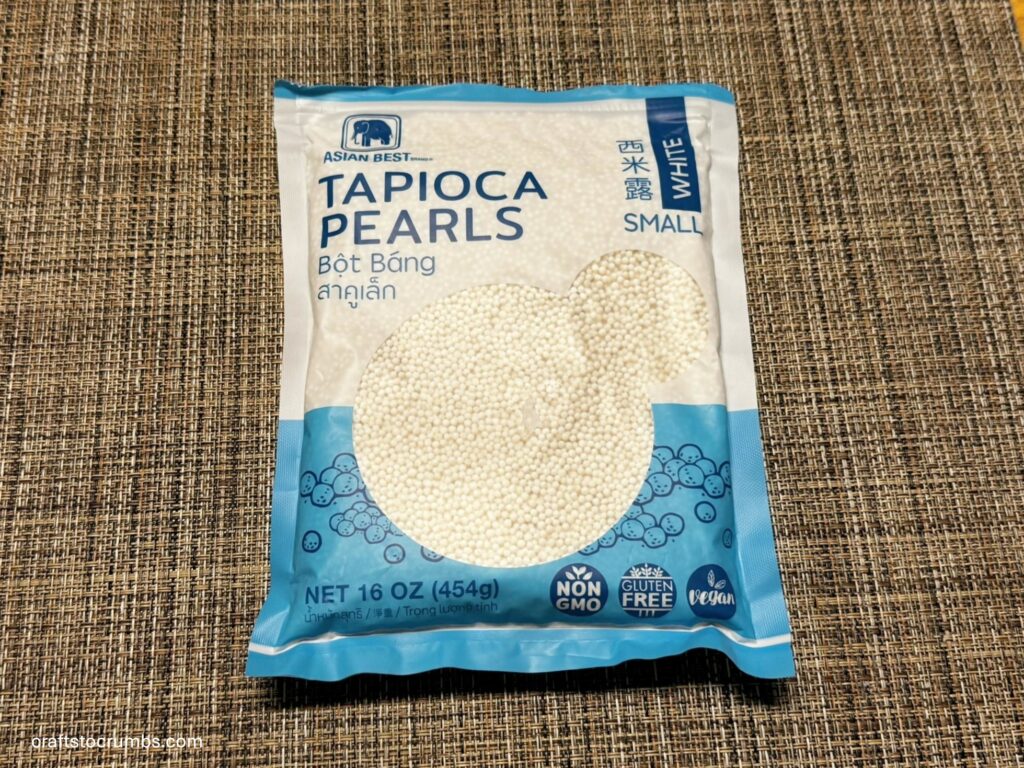
Tapioca pearls – use small tapioca pearls. Large tapioca pearls will take longer to soak and cook. They also tend to be harder to shape too. You can find these at your local Asian market or on Amazon.
Cilantro / coriander – the cilantro in the filling is optional. It adds a little earthiness to the filling. I used it in this recipe because I know they’ll bolt any day now if I left them in the garden. So, why not use them while I have them.
Garlic oil – the garlic oil helps to keep the dumplings from sticking to each other. If you don’t have garlic oil, you can drizzle with a little bit of oil and top with fried garlic. I find that if you wait for the dumplings to cool slightly on the banana leaves, they naturally become less sticky, and you don’t have to use as much oil.
Color – I used butterfly pea tea and lemon to add color. This does add a lemony aftertaste to the dumplings, which cuts the richness of the dumplings. You can use pandan or even roselle hibiscus tea to add other natural colors. Note that they will most likely exhibit those flavors as an aftertaste as well.
Make ahead – the filling can be made up to 2 days ahead of time. I have successfully made and freeze the filling in vacuum seal bags for up to 3 months. Thaw overnight in the fridge before using. This works great if you want only about a dozen or so for snacking and you’re not feeding an army. Soak as many tapioca pearls as needed.
Sakoo Yat Sai (Tapioca Dumplings)
Time: 1.5 hours
Makes: 36-40 dumplings
8 oz. (258g) lean ground pork (90/10)
½ onion, diced (100g)
5-6 garlic cloves (25g)
3-4 sprigs of cilantro (optional)
1 teaspoon black peppercorn
½ teaspoon ground white pepper
½ teaspoon MSG
50 g palm sugar, 1 large cube, shaved
3 tablespoons fish sauce
1/2 teaspoon salt, divided + more to taste
½ cup (70g) dry roasted peanuts, crushed
1-2 tablespoon vegetable oil, divided
1-2 tablespoons fried garlic or fried garlic oil
12 oz. (345g) small tapioca pearls
¾ – 1 cup hot water (177 ml – 236 ml)
1 tablespoon butterfly pea tea (optional for color)
½ teaspoon lemon juice (optional for color)
Banana leaves or parchment for steaming
Accompaniments:
Lettuce
Dried chilis or fresh chilis
Cilantro sprigs
Mint sprigs
- If you want to color the tapioca, divide tapioca pearls for portion that you want to color. Using a strainer, rinse the tapioca pearls under cold water. Let it drain in the strainer for a minute before transferring into a bowl or pie pan. Make sure they are evenly distributed so the water can is soaked evenly.
- Slowly add hot water to the tapioca pearls and cover with a lid or plate that is large enough to cover the bowl and let it sit for 30-45 minutes. To naturally color the tapioca pearls, steep the butterfly pea in the hot water for a minute. This will get you dark blue color. Add a squeeze of lemon juice to get purple. If you steep the tea for too long and the liquid has cooled, warm it up in the microwave for about 30 seconds or so. Then add the hot tea to the tapioca pearls portioned for color. Cover and let it sit for 30-45 minutes.
- In the meantime, prepare the filling. Use a mortar and pestle pound the garlic, peppercorn, cilantro, if using with a little bit of salt. Alternatively, you can finely mince these ingredients. The peppercorn with have to be crushed separately. You want almost a paste-like consistency.
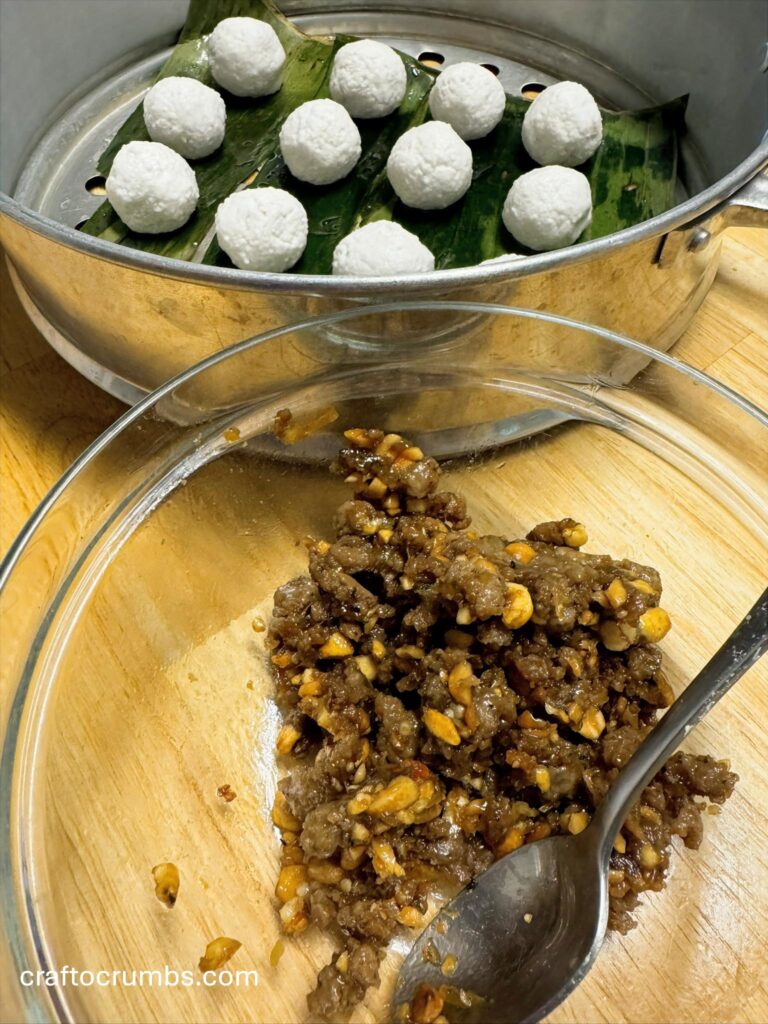
- Add the oil to pan or wok and bring up to temperature over medium heat. Once the oil is hot, add the diced onions and cook for a minute before adding the garlic paste. Cook until fragrant, about 30 seconds. Add the pork, fish sauce, ground white pepper, and MSG. Cook until the pork is no longer pink. Push the pork to one side of the pan and keep that side of the pan off the heat, if possible, add the palm sugar to the other side and let it melt until it looks like caramel. Stir the pork into the sugar and ensure they are completely combined. Sprinkle in the crushed peanuts. Give the filling a taste. Add the remaining salt and adjust to taste. Cook until liquid has dried off. Remove from heat and set aside until ready.
- After the tapioca pearls have sat for the allotted time, they should be saturated but crumbly. Press a portion of the tapioca to form 1-inch balls. Flatten into a disc and fill with about a teaspoon of the filling. For the filled tapioca into a ball. Repeat until you have used up all your ingredients.
- Bring a steamer pot to a boil. Line the steam tray with banana leaves that has been brushed with oil. Arrange the dumplings about an inch apart on the banana leaves. Steam for 12-14 minutes until the tapioca is translucent and soft.
- Let the dumplings cool slightly. Then toss with a bit of fried garlic oil or sprinkle with fried garlic.
- Serve with accompaniments. Enjoy!
Discover more from Crafts to Crumbs
Subscribe to get the latest posts sent to your email.